Pages

Monday, 10 September 2018

Battlefield V (BETA)

It feels like all the news I’ve read about Battlefield V these last few weeks hasn’t been about what’s going to be in the game at release, but what’s not going to be. That’s because Battlefield V will be using a ‘live service’ model – various features, modes and mechanics will all be added post release for free.

But as curious as I am about the long term content plan of BFV, I’m currently more interested in what will be available upon launch. What am I paying for on Day 1? At the time of writing, I still don’t know. There’s no clear list of release day content in terms of maps, modes or features.

And there’s no clear road map of future content, either. The problem with this live service model is that there’s no guarantees – it’s no different than purchasing a Season Pass without knowing what that Pass will include.

You’re essentially paying in advance for content but you don’t know what that content is, or when it’s likely to be released – or even if it will be released at all. Like I said, there’s no guarantees. Let’s say Battlefield V doesn’t meet EA sales projections – do you really think they won’t scale back their live service plan?


That concerns me. I’d feel far more confident purchasing Battlefield V at release if I had guarantees regarding future content. I understand that things can change during development, and they may be wary to commit to content plans long term. But I find it hard to believe they can’t at least give us a ‘Year 1’ type of road map so we’re clear what content to expect alongside a rough release schedule.

Maybe we’ll get something like that closer to release. I hope we do, because I’m not going to pay in advance for content that EA may decide to cancel if Battlefield V doesn’t sell as well as they’d like. It’s a shame I have to talk about this and not just the game, but it’s an important aspect of Battlefield V that can’t be ignored.

Okay, so how do I feel about the actual game now I’ve played this BETA? Graphically, BFV looks great, but that was always to be expected. And performance, overall, is really good too – aside from a handful of occasions where I’d join a game in progress and get some nasty frame drops, forcing me to quit.

There is one issue I had with the visuals though, primarily upon the Norway map. It’s a very visually ‘busy’ map and I found that playing it for more than an hour or so started giving me a headache. I think it’s all the snow effects – which do look great – but it really does clutter your screen at times, making focusing upon the environment a bit of a strain on the eyes. Obviously, not everyone will suffer this issue, but it was a problem for me.


The lighting in some interiors could also be very dark, particularly on the Rotterdam map – there are places you can sit where you’re practically invisible. Seriously, one time I just crouched in a corner whilst about 4 enemy players stood in front of me totally unaware.

Of the two maps available in this BETA, I’d say I enjoyed Rotterdam more because there seemed to be a better balance between long and short range combat, whereas Norway felt like a sniper’s paradise. I don’t typically like to play as a sniper – because I’m bloody terrible at it – but I frequently did on the Norway map because of how it’s designed – lots of open spaces, long ‘corridors’ with easy shots to line up and near limitless angles.

That said, even the standard Assault class machine gun is surprisingly effective at long range, so you’re not at that great a disadvantage – there certainly needs to be a little more balancing between the various weapons. I would have preferred to use the semi-auto rifles as an Assault, for example, but I felt they were objectively worse than than a full auto machine gun, even at long range.

I’m not sure about the ‘ammo supply’ mechanic, because right now, it just means you’ll immediately head for a ammo and health station as soon as you spawn – your starting ammo is pretty weak, roughly only half of what you can carry for your primary weapon. It feels like it should start you on full, and then use the ammo stations or squad supplies to keep you going.


Speaking of the squad mechanics, the ability to revive your squad mates – even if you’re not a medic – is a neat way of trying to get people to work together, and when it works, it’s pretty great. But, as you’d expect, not everyone seems to care, and I lost count of the amount of times someone on my squad ignored a revive, even when it was perfectly safe to do so. It’s pretty damn annoying, but maybe they’re just not aware of the system yet.

Combat, in general, feels pretty good, but movement isn’t as smooth as I’d like. I frequently got stuck on scenery when attempting to vault or climb over various objects. You’re not quite as agile in combat as the trailers seem to suggest. I can’t say much about vehicles, because I only got to try them on a handful of occasions.

The ‘fortifications’ feature, whereby you can build defences upon the map, is a pretty fun addition and can actually be very effective in some locations, allowing you to block access points for enemy infantry. I also like the destructibility of the environment. It’s pretty exciting when you’re in a house and you see a tank lining up a shot, just before the wall explodes and you get knocked to the floor, before dragging yourself to safety.

I’m not quite decided on the TTK right now. At times, it feels a little too fast, but at others, it feels just about right. I think the key with TTK is that you want to feel like it’s not just a game of ‘who sees who first’. There has to be a moment – even a small moment – where you can react and either return fire, or seek cover. And because there’s no ‘kill cam’ you never know who shot you or where they were, so some deaths can feel rather random and unfair.


And lag can be a bit of an issue. There are moments you’ll shoot people in the head or body multiple times but it doesn’t seem to register, and others when you think you’ve taken cover and avoided getting hit, only to suddenly drop dead due to a ‘bullet delay’ or whatever you want to call it. It didn’t happen often but it was annoying when it did.

As far as bugs go, I saw a lot animation issues, most noticeably with dead bodies. There’s also a horrible audio glitch when houses collapse – it’s loud and painful to hear. It certainly needs some polish and balancing, but it’s not in terrible shape.

So I guess the real question is – did I enjoy the BETA? Overall, yeah, I did. But did I enjoy it enough to drop sixty quid on just the standard release edition? Not at the moment, especially when their ‘live service’ plans are still so vague. I want a clear list of release content and some kind of guarantee regarding future content, at least for the first year. Maybe then I’ll consider it. Maybe.

Wednesday, 5 September 2018

Now Watching: A Quiet Place

A Quiet Place is the kind of film I’d probably enjoy more if I could switch off that part of my brain that says ‘this is dumb and doesn’t make sense’. But I couldn’t, so I didn’t. I quite like the concept – a horror film set in a world where mysterious creatures hunt people using sound. I say ‘mysterious’ because the film doesn’t explore their origins, and frankly it doesn’t need to.

But what it did need to do was establish come kind of consistent behaviour for these creatures and that, for me, is where the film stumbles and falls. At times, the creatures in A Quiet Place behave like mindless brutes. Wild animals without reason.

Yet, at others, they behave like intelligent predators, carefully stalking their prey. The film can’t quite seem to decide, so the creatures behaviour changes depending upon what the script requires. And I think that’s why I found it so hard to be engaged by A Quiet Place. What are the rules? What can and can’t you do? How do the creatures determine which sounds are prey and which are not?

The behaviour of the creatures is far too inconsistent for me to be drawn into the suspense the film is clearly going for. I found a scene involving a rusty nail and a bare foot far more unsettling than anything involving the people eating monsters. A Quiet Place also tries to be clever with its world building, but it only results in more distracting questions.

The film makes it clear that these creatures are a global threat, but they didn’t spread so rapidly that people weren’t able to write, print and deliver newspapers about them. So there was obviously time for people to formulate a way of dealing with these creatures. And nobody – seriously nobody – in the world thought that a creature that hunts through and is incredibly sensitive to sound may also be vulnerable to sound?!

I figured that shit out about fifteen minutes in, not because I’m a secret genius but because it’s so f**king obvious. I was also a little annoyed by some of the typical ‘character must do something stupid to create tension’ moments that you kind of expect in a horror film, but this one feels like it should have been smarter about it.

I can’t really fault any of the performances or the direction, it was just the inconsistency of the creatures that spoiled the film for me because once I realised their behaviour was determined purely by what the plot required in any given scene, I couldn’t really take the film seriously or be engaged by it. I did like the way the film ended, though. It was a nice and clever way of punching out.

Overall, A Quiet Place was okay, I guess, and I know not everyone will be as bothered by the details as I am. But for me, an effective horror film is one I come away from feeling unsettled. It plays on my mind in the hours and days after seeing it. But A Quiet Place wasn’t able to achieve that. I came away more annoyed by it than anything, and in a day or two I’ll probably forget all about it.

5/10

Wednesday, 29 August 2018

Tuesday, 21 August 2018

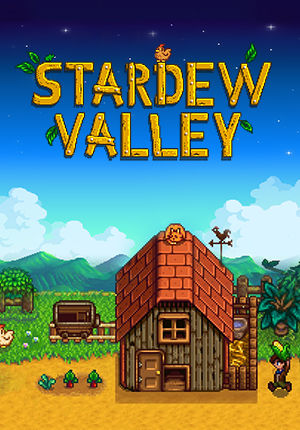
Now Playing: Stardew Valley

I remember playing and enjoying Harvest Moon on the GameCube, so I’ve had my eye on picking up Stardew Valley for the last couple of years. Because that’s essentially what it is – a new Harvest Moon game. It’s like someone decided if Nintendo weren’t going to make one, they’d just make their own. With blackjack. And hookers.

I didn’t pick up Stardew Valley on PC though, but on Switch. It seemed like the perfect fit and a perfect game to play on the go. But I ended up playing 90% of the game in docked mode, not portable. Why? Primarily, because Stardew Valley has the very strange omission of a ‘Save & Quit’ feature.

You can only save your progress at the beginning of every day, and each day lasts about 15 minutes. It’s not the sort of game you can just jump in and out of in short bursts. Stardew Valley is all about efficiency, about making the most of each and every day. If you’re thinking this is some kind of relaxing farming sim – think again. It can actually be kind of stressful, particularly during your first couple of seasons, as you’re constantly fighting against the clock to get things done.

And this initial struggle is probably the strongest part of the experience. Getting your farm established and organised, clearing land and expanding your farm, constructing and upgrading new buildings, crafting and upgrading various tools, exploring the local town and surrounding area, delving deeper and deeper into the mines . . . it’s a hell of a lot of fun. There’s so much stuff to see and do and get stuck into, and you never seem to have quite enough time or resources to do everything.

The heart of the game really is making money (gold) so you can make even more gold. It’s the ultimate ‘spend money to make money’ game. You plant seeds to grow crops to sell, so you can make gold to buy even more seeds and grow even more crops to make even more gold so you can buy even more seeds and grow even more crops to make even more gold so you can buy even more seeds and . . . I think you get the idea.

Planning each season’s crops and trying to maximise your income is pretty fun and addictive, not to mention satisfying when your big crop finally comes through and you get a massive pay day. And that satisfaction extends to the rest of your farm. Seeing it grow, investing in new buildings allowing you to house animals or produce your own ‘artisan’ goods, expanding and decorating your house . . . there’s so much to keep you busy and unlock that you’re always looking for what you want to improve upon or invest in next.

There is more to Stardew Valley than just your farm, however, as you have an entire town of characters you can interact and build ‘relationships’ with. This basically just amounts to giving them lots of ‘gifts’ but each resident does have their own unique personality and routine depending on the time of year. They also have quests you can complete for either gold, or to improve your relationship ‘level’.

And, like Harvest Moon, you can even marry and have kids with one of them. Unfortunately, the kids never grow up so you can’t put them to work and later get into a legal dispute when you decide to cut them out of your will and leave all of your lucrative land to an aggressive charity that’s groomed you through your twilight years. You also can’t hire help on the farm, which seems a little strange, because once you’re rolling in tons of gold, you can easily afford to pay someone to help with the day to day chores – like that homeless dude who lives in a tent. I’d even build a shed for him to live in, that’s how generous I am.

As much as I’ve enjoyed the game – and would seriously consider picking it up again on PC, which gives you an idea how much I’ve enjoyed it – that doesn’t mean it doesn’t have its flaws. It would be nice if your ‘relationship tracker’ also tracked the location of residents in the town, as keeping track of their movements all year round can be pain if you want to speak with one specifically, especially when your time each day is so short.

The controls and UI can be a little fiddly, especially when you’re trying to pinpoint a specific tile with a tool or item – there’s no grid overlay you can bring up so you can properly line things up. Your cosmetic options for decorating your house are somewhat slim, as are character customisation once you’re in the game.

The biggest problem Stardew Valley really has is the ‘end game’. Once you’ve gotten established and upgraded all your various tools and buildings, you just kind of settle into a fairly monotonous routine. You hit a point – and I hit it by the end of my second year in the game – where you’ve banked so much gold that you don’t really have anything left to save or invest in. You’re just playing out each day and season the same way, making money that you don’t really need with nothing to spend it on.

I guess that’s when the game is supposed to be more ‘relaxing’ but that’s also when I start to lose interest. Fortunately, the game does include some goals to complete beyond your farm – the museum and the community centre, both of which you can donate various items to. For me, rebuilding the community centre became the real final ‘goal’ of Stardew Valley, and I got a great sense of satisfaction from finally putting it together. It felt like a good ‘end’ to my game.

And I can see myself returning to Stardew Valley for a new game, on a new farm – just to see if I can do it even faster or more efficiently. Overall, Stardew Valley is addictive and satisfying fun with a wonderful variety of content to explore. And if you’re looking for a modern Harvest moon type experience, then I highly recommend checking it out.

8/10

Monday, 13 August 2018

No Man’s Sky: NEXT

The more things change, the more they stay the same – I think that’s the best way to describe how I feel about this latest update to No Man’s Sky. For all the graphical and gameplay overhauls introduced in this update, the core of No Man’s Sky remains the same. If you didn’t enjoy it before, you probably won’t enjoy it now.

No Man’s Sky has had quite the remarkable journey since its initial release, and it appears that for many, NEXT finally delivers the game that was promised. It’s taken two years and numerous minor and major (free) updates to get this far, so I’ve got to give the developers credit for sticking with it.

The big new feature of No Man’s Sky: NEXT is the introduction of multiplayer to the experience. But honestly, I can’t say MP was ever a selling point that particularly appealed to me, and not just because I don’t have any friends. I guess I just don’t really see the point of MP within the NMS experience.

The content, as it currently exists, just doesn’t lend itself to co-op gameplay, at least in my opinion. This may, of course, change over time as more meaningful co-op content and interactions are introduced. But in its current state, I have no interest in playing NMS with others. For me, the solo experience remains the most compelling aspect.


Another major feature of NEXT is a pretty extensive graphical overhaul. There’s been a noticeable bump in texture quality, lighting and particle effects. NMS has never looked better, and I’m pleased to report that the game is running more smoothly than ever – at least for me. NEXT also incorporates a new third person mode, complete with character customisation. I prefer to play in first person, but it’s a welcome addition.

As far as gameplay overhauls go, NEXT introduces many changes to the resources of NMS. The types of resources you can collect and now refine has been expanded, and the ‘fuel’ requirements for your ship, exosuit or multi-tool have been adjusted accordingly.

But these changes . . . I’m not so sure about. Does it make the resource harvesting more in depth? Or more needlessly convoluted? I’m currently leaning more towards the latter. Before, you only had to worry about harvesting a singular type of resource but now, it’s pretty much a requirement to refine your materials.


Refined resources – such as condensed carbon – give far more bang for your buck. On the plus side, you won’t have to harvest quite so much carbon. But on the negative side, you’ll be spending a lot of time waiting for your resources to be refined. That’s why I’m kind of torn on this new system. It just feels like another unnecessary step that slows you down. Sure, you can ignore refining materials, but you’ll burn through their raw forms so quickly that you’ll be constantly harvesting to replace them.

No Man’s Sky was always quite a slow, grind heavy experience, but now it feels even more so due to these changes. It should be noted, however, that this impression is based on the early part of the game (I began a new game for NEXT) when your inventory is quite limited and your exosuit and multi-tool are at their most basic level. I’m sure, over time, once you have an established base, upgraded tools and multiple refiners, that you won’t find the new resource system quite such a tedious chore. But in the early game? Yeah, I’ve found it a little tiresome.

Which brings us back to my opening line – the more things change, the more they stay the same. For all the changes, updates, additions, improvements and overhauls to No Man’ Sky, it’s still – at its core – the same experience it was at release. I really do enjoy it. Hell, I’ve sunk 90 hours into the game. But the problem is, I only enjoy it for a short time, before getting kind of bored and stopping. The core gameplay loop becomes monotonous and repetitive, and there’s just not enough good quality structured content to keep me coming back.


I think they’ve done enough with the sandbox elements – although, once again, I still think they need to massively expand the flora and fauna components, as repetition becomes a serious problem once you’ve visited several worlds. But as far as the survival/exploration elements go, they’ve got that shit locked down. What we really need now is an expansion to the structured systems.

They’ve done a good job of introducing new quest lines and overhauling existing ones, and they do seem to be moving in the right direction in terms of race / guild reputation systems and a selection of randomly generated – if rather basic – missions. But I still think combat – and combat encounters – need a serious overhaul to make them a more important part of the experience.

Overall, NEXT is another important step forward for No Man’s Sky, but I hope it doesn’t stop here. There’s yet more potential here they can unlock, and with more time, updates and support, I can see NMS becoming one of – if not the best – space exploration, combat and trading game on the market. As I said, the potential is here. It will mean shaping the game into an experience that perhaps wasn’t quite what the original ‘vision’ was, but NMS has potential to move beyond that vision and become something even greater.

Thursday, 2 August 2018

Now Watching: Annihilation

I thought Ex Machina was great, so I was eager to see Annihilation by the same writer/directer, Alex Garland. Unfortunately, it’s a film I came away liking the concept of, rather than the execution. It’s a film with some very good individual scenes – but not a very good overall structure. Be warned: there will be a few spoilers in this review.

The plot is this: an object/meteor or whatever crashes into a lighthouse on the coast. It forms a bubble – called the ‘shimmer’ – around the lighthouse which slowly begins to expand, consuming the surrounding area and transforming it – and any life within it – in strange and incredible ways.

Lena (Natalie Portman) is a former soldier and biologist who volunteers to join an expedition into the shimmer. The problem is, the film is essentially a flashback being told by Lena after she’s escaped. We know at the very beginning who lives, who dies and who gets out. And these scenes of Lena being debriefed – and also flashbacks to her life before entering the shimmer – seem entirely unnecessary.

We also don’t really know jack about the other scientists accompanying Lena. We’re told a few things about each character in a single scene and . . . that’s it. That’s all we get. As a result, I can’t say I really cared too much about what was happening to them.

This is also a film that raises a lot of distracting questions when watching. We’re told they’ve been investigating the shimmer for three years. They’ve sent in other teams – mostly military – by land and sea, but none have returned. So their new plan is . . . to send in another team? But why do they believe it will work this time, when all other expeditions have failed?

And why are they only sending a team of scientists into potentially hostile terrain? Why not send a military escort? In fact, why wasn’t their first expedition composed of both science and military personnel? Maybe it was, but the film completely glosses over these important questions.

They say drones were sent in, but what about helicopters? Can’t you fly in? Can’t we send a helicopter to park above the shimmer and drop a team down on ropes straight to the lighthouse? They say they’ve tried going in by sea – which makes sense, considering it’s the most direct and easiest route to the lighthouse – but this time they’re sending in their team on foot. Why? Why not just use a boat launched from a ship at the edge of the shimmer?

And if you want to go by land, why not send them with some transportation? Do the engines not work? All their cameras seem to work, so why wouldn’t an engine? They say nothing entering the shimmer has returned, but they seem pretty sure the air isn’t toxic because they enter it without any gas masks or hazardous protection. And why, if they know so little about the shimmer, do they need to go all the way to the lighthouse? Can’t they just go in several metres attached to a rope, take a few samples and return?

You could say these are pointless nitpicks because the film is really about what happens when they’re inside the shimmer, but I don’t think it can just gloss over all this stuff as irrelevant. It’s not to me, because I spent the entire film distracted by these questions. And even once they’re inside, things don’t quite add up, either.

Early in the film the characters ‘forget’ their first 3-4 days inside the shimmer, but why don’t they have video/written logs they can review? Isn’t this a scientific expedition? Wouldn’t they be documenting everything? It might make sense if we saw evidence of time becoming distorted the closer they moved to the lighthouse, but the lost time element is entirely forgotten beyond this opening scene.

The actual concept of what the shimmer is and what it’s doing is pretty neat and, as I said, it leads to some really good individual scenes. But the overall plot and the way it’s structured – the flashbacks/flash forwards – are rather weak, as are the characters, none of whom are given any time to shine.

Annihilation was frustrating to watch, because there’s some really cool stuff in here, both conceptually and visually. But everything surrounding that concept just fell a little flat for me. I’d still say it’s worth checking out, but don’t expect too much.

6/10